
How To Create a Wedding Budget You'll Actually Stick To

Wedding budgeting has a funny way of starting with a number and ending with, “Wait…how did we spend that much?”
It’s usually not because couples are irresponsible with money. It’s because most wedding budgets are built backward.
You pick a number that sounds reasonable, start booking vendors, discover what weddings actually cost in your area, fall in love with a few things you hadn’t planned for, and suddenly the original budget has very little to do with what you’re actually spending.
A wedding budget you’ll stick to needs to be realistic before you start spending.
Here’s how to build one.
Step 1: Start With the Amount You Can Actually Spend
Before you research venues, photographers, florists, dresses, or anything else, figure out how much money is realistically available for the wedding.
That means having an honest conversation about:
How much you and your partner can contribute
Whether family members are contributing
How much you can comfortably save before the wedding
Whether there are other financial priorities you don’t want the wedding to interfere with
The key word here is comfortably.
Your wedding budget shouldn’t require you to drain your emergency fund, delay important financial goals, or spend the first year of marriage paying off decisions you made for one day.
If $30,000 is technically possible but $22,000 allows you to sleep at night, your budget is $22,000.
Step 2: Build Your Budget Around Your Guest Count
One of the biggest mistakes couples make is creating a wedding budget before creating a realistic guest list.
Your guest count affects far more than catering.
More guests can mean a larger venue, more tables and chairs, more linens, more centerpieces, more invitations, more rentals, more transportation, more alcohol, more cake or dessert, and more staff.
That’s why the difference between a 40-person wedding and a 175-person wedding can be enormous—even when the couple chooses similar vendors.
Before deciding what your wedding “should” cost, decide approximately how many people you want there.
At Plannerd, we like to think about weddings in four broad sizes:
Just Us: 2–10 people Small: 10–50 people Mid-Size: 50–120 people Large: 120–250+ people
You don't need your final guest list yet. You just need to know which neighborhood you're living in.
Step 3: Budget for Where You’re Actually Getting Married
A $40,000 wedding does not buy the same wedding everywhere.
Venue rates, catering, labor, rentals, photography, florals, transportation, accommodations, and other vendor costs can vary dramatically depending on location.
A wedding in New York City or Napa Valley may require a very different budget from a wedding with the same number of guests in Buffalo or Bakersfield.
This is why generic advice like “spend 10% of your budget on photography” isn't always particularly helpful.
Start with what weddings of your size typically cost in your market.
Then build from there.
Step 4: Decide What You Actually Care About
Now comes the important part.
You do not have to care equally about everything.
Sit down separately and have each partner choose the three things that matter most to them.
Maybe yours are:
Photography
Food
Venue
And your partner's are:
Live music
Open bar
Having everyone there
Compare your lists.
Those priorities should influence where your money goes.
If incredible photography matters deeply to you, allocating more money to photography isn't “going over budget.” It’s intentionally moving money from something you care less about.
Maybe that means simpler florals.
Maybe you skip favors.
Maybe you choose digital invitations.
Maybe you couldn't care less about having twelve different desserts.
A good wedding budget isn't about spending as little as possible.
It’s about spending intentionally.
Step 5: Create a “Don't Care” List
This might be even more valuable than your priority list.
What wedding expenses genuinely don't matter to you?
Not what TikTok says you need.
Not what Pinterest says you need.
Not what your cousin had at her wedding.
What could disappear from your wedding tomorrow without affecting how you feel about the day?
Write those things down.
Your list might include:
Favors
Elaborate invitations
Wedding-party gifts
Custom signage
Luxury transportation
A huge wedding cake
Ceremony programs
Matching robes
Specialty linens
elaborate décor
There is nothing wrong with spending money on any of those things if you value them.
The problem is spending thousands of dollars on details you don't particularly care about because weddings have convinced us they're mandatory.
They aren't.
Step 6: Don't Spend 100% of Your Budget
If your maximum wedding budget is $40,000, don't create a plan that spends exactly $40,000.
Something will change.
A vendor quote will come in higher than expected. Your guest count will increase. You'll discover a rental fee you didn't know existed. You'll add alterations. You'll decide you really do want late-night pizza.
Give yourself breathing room.
A smart starting point is to keep roughly 5–10% of your total budget unallocated.
For a $40,000 wedding, that means initially planning around approximately $36,000–$38,000.
That remaining money becomes your buffer instead of your credit card.
Step 7: Budget With Real Quotes, Not Internet Estimates
Online wedding averages are useful for establishing expectations.
They are terrible substitutes for actual quotes.
Once you begin contacting vendors, replace your estimates with real numbers.
If you budgeted $5,000 for photography and your three favorite photographers quote $6,500, $7,200, and $7,500, you have new information.
You now have three choices:
Increase that category.
Find photographers closer to $5,000.
Move money from another category.
What you shouldn't do is book the $7,500 photographer while leaving $5,000 in your spreadsheet and telling yourself you'll figure it out later.
That is how wedding budgets quietly implode.
Step 8: Track the Real Cost of Every Booking
The price advertised on a vendor's website isn't always the final price.
Your actual cost may include:
Taxes
Service charges
Gratuities
Delivery fees
Setup fees
Travel fees
Overtime
Rentals
Add-ons
Minimum spends
Your budget should track the expected final cost, not just the package price.
A $12,000 catering proposal can become a very different number once service charges, taxes, rentals, and gratuities are included.
The earlier you account for those costs, the fewer surprises you'll have later.
Step 9: Every Upgrade Needs to Come From Somewhere
Here is one rule that can save your wedding budget:
If money goes into one category, it has to come out of another.
Suppose your original floral budget is $4,000.
Then you see a ceremony installation you absolutely love and the new proposal becomes $6,500.
Great.
You can absolutely choose it.
But the additional $2,500 needs a home.
Maybe you reduce rentals by $1,000 and entertainment by $1,500.
Now you're still on budget.
What gets couples into trouble is repeatedly saying:
“It’s only another $500.”
Because weddings contain a lot of opportunities to spend “only another $500.”
Ten of those decisions is $5,000.
Twenty is $10,000.
Step 10: Separate “Paid” From “Committed”
This one matters.
If you've signed a contract for $8,000 and paid a $2,000 deposit, you have not spent $2,000.
You've committed $8,000.
Your wedding budget should always show:
Budgeted — What you planned to spend Committed — What you've contractually agreed to spend Paid — What you've actually paid Remaining — What you still owe
Otherwise your bank account can make you feel much richer than you actually are.
Step 11: Have Regular Budget Check-Ins
You don't need to talk about the wedding budget every night.
Please don't.
Instead, schedule a quick budget check-in periodically throughout planning.
Review:
Total budget
Total committed
Total paid
Upcoming payments
Categories running over budget
Categories running under budget
Remaining buffer
Then make adjustments while they're still easy to make.
The goal isn't perfection.
The goal is avoiding the horrifying moment three weeks before your wedding when you finally add everything together.
The Wedding Budget Rule We Want You to Remember
Your wedding budget isn't supposed to tell you what you can't have.
It's supposed to help you decide what you want most.
Spend more on the things you'll remember.
Spend less on the things you won't.
Skip the things you don't care about.
And leave enough room in the budget that you can enjoy your wedding without wondering whether every beautiful moment came with a financial hangover.
Because the goal isn't simply to plan an incredible wedding.
It's to start the next chapter of your life feeling good about how you paid for it.
Build Your Wedding Budget With Plannerd
Plannerd helps you turn the overwhelming question of “How much is this wedding actually going to cost?” into a budget you can understand, manage, and adjust as your plans evolve.
Start with your location, wedding size, priorities, and spending goals. Then build a budget around your wedding—not somebody else's Pinterest board.
Create your wedding budget at Plannerd.com.
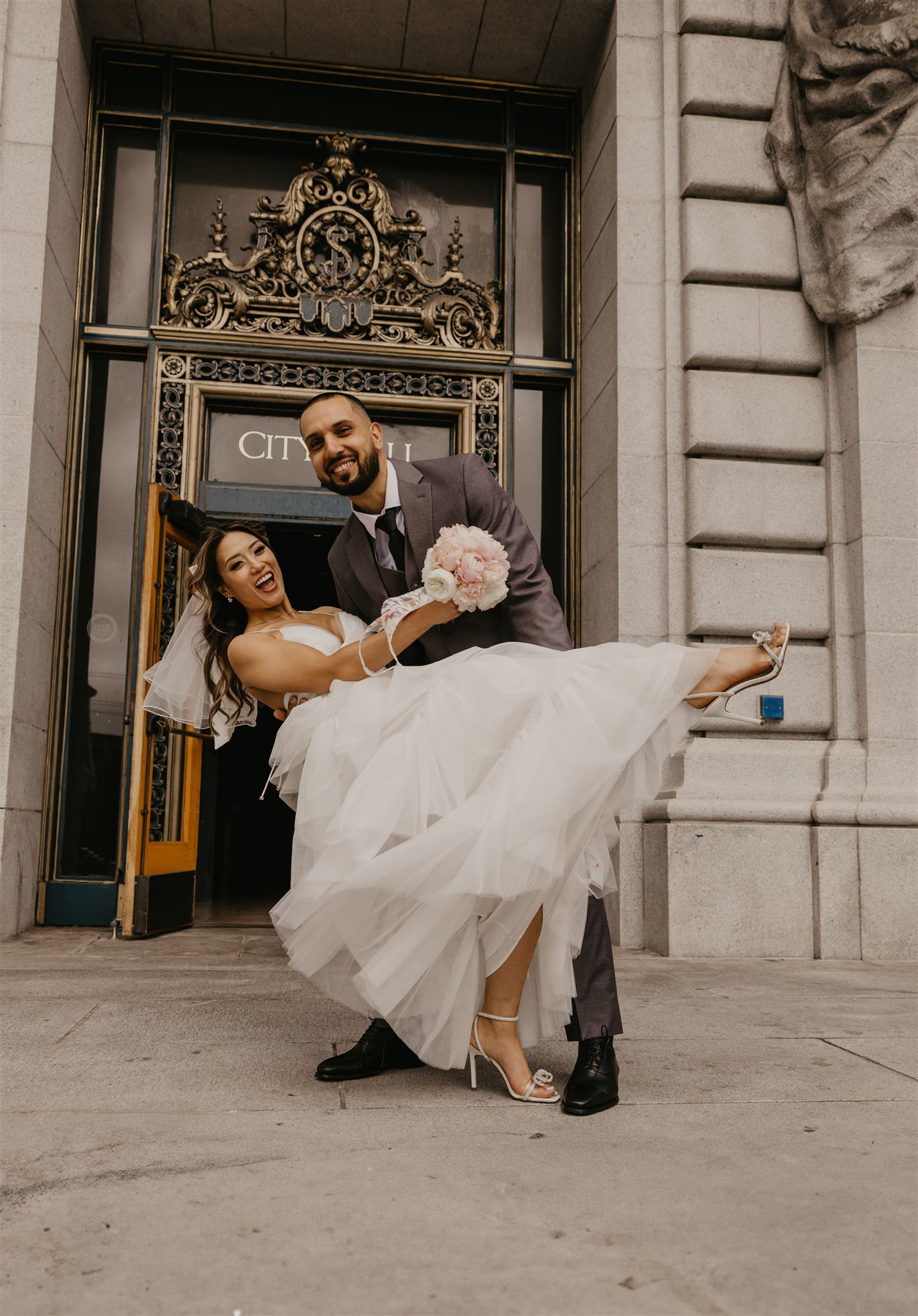
Photography by @SarahPetersonPhoto - Sarahloupeterson.com


